View the Site Map of TENAX Worldwide web siteSearch the TENAX web site
Tenax local web sites TENAX Worldwide web site
TENAX Company Profile
ITALIANO  
History   THE GROUP   SUBSIDIARIES   MARKET   PRODUCTION
  PROCESS   QUALITY   LABORATORY   ENGINEERING
  RESEARCH   PATENTS   APPLICATIONS   HISTORY
1960
TENAX DEVELOPED MODERN EXTRUSION HEAD TECHNOLOGY

At the beginning of the sixties, TENAX managed to significantly develop extrusion heads, increasing their dimensions from just 2 up to an impressive 20 inches.
In this way TENAX gained world-wide supremacy with products that were totally innovative in mesh width, size, structural resistance and therefore also in their applications. One example of this is Olinet netting, that was designed for the harvesting of olives.
  TENAX developed modern extrusion head technology


1962
TENAX produced the first extruded tubular netting in polypropylene

TENAX has always had the characteristic of responding to market requests with products that are totally functional in terms of needs. A clear demonstration of this is extruded tubular netting in polypropylene, a development that allowed TENAX to brilliantly fulfill many specific needs, starting with those of the food industry. TENAX nets for the packing of Bologna sausage-meat (Mortadella) quickly proved themselves to be an indispensable product for use in salami factories.

1964
TENAX utilised high-density polyethylene for fencing

In the mid-sixties TENAX was the world's> top company in the manufacture of rhomboidal mesh fencing in high-density polyethylene. The specific application field for such products widened to a potential that could not be envisaged before that time.

1968
TENAX applied bi-expanded netting in the nursery-gardening field

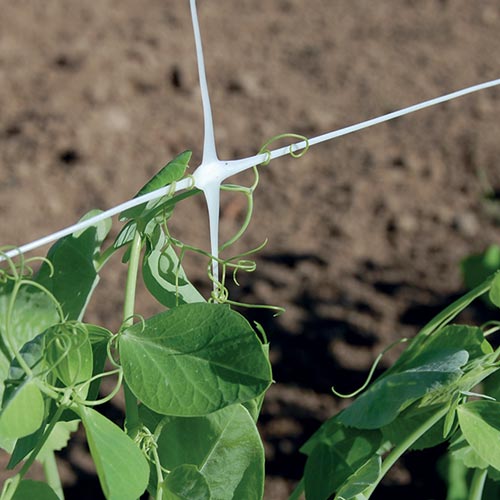
TENAX's development commitment directed to the agricultural sector is rich in awards and products that have drastically revolutionised nursery-gardening production techniques, in protecting crops and in harvesting systems. One of the most important and most appreciated is the Hortonova support net for flowers and vegetables - its name identifies it with this application procedure in this sector. It was a decisive step forward from the traditional systems or the use of metal supports.

1973
TENAX offered bi-expanded extruded netting as an alternative to metal

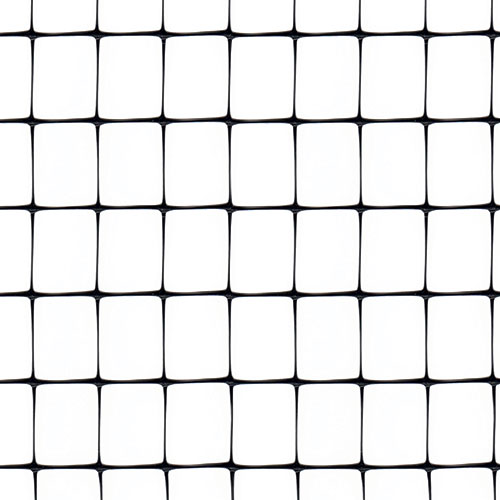
The range of extruded fencing products was widened thanks to TENAX. The original TENAX longitudinal and transversal stretching technology made a fundamental contribution to this development. It significantly increased the resistance, strength and reliability of the netting, going so far as to achieve similar characteristics to metal netting. TENAX opened up a new manner of resolving fencing problems with its launch of Cintoflex bi-oriented netting.

1980
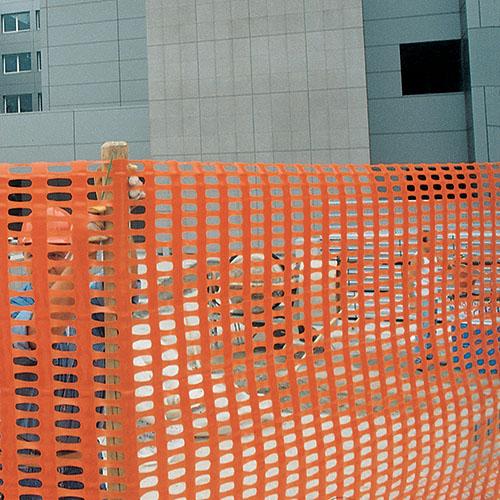
TENAX gained world-wide fame with its orange netting for building sites

The modern building site has become increasingly important for TENAX in its commitment to research and production. It is not by chance that the examples of supremacy that TENAX gained in the construction industry are just as important as those gained in the agricultural and geo-technical field. Its orange netting is an emblem of the Group's continued collaboration with companies working in the construction industry, and it has become the symbol of open sites and work in progress.
1985
TENAX created an innovative line of integral geogrids

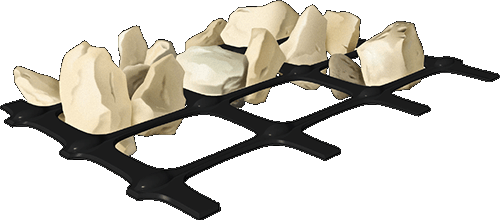
New technological progress enriched the range of TENAX products, marking a new stage in the path of evolution for plastic netting. Overcoming the limitations of traditional welded, woven and punched grids, TENAX patented an innovative moulding and continuous expansion technology for integral geogrids.

1989
TENAX created a new standard in geoNETS for drainage

In order to respond to the increasingly complex requirements of modern solid waste dumps, TENAX was the first to create a drainage geonet with a width of up to 4 metres - double those on the market at that time. Thanks to the speed of their installation and the cost-reduction benefit they offered, these products became true reference standards in North America.

The Nineties - TENAX presented new civil engineering products
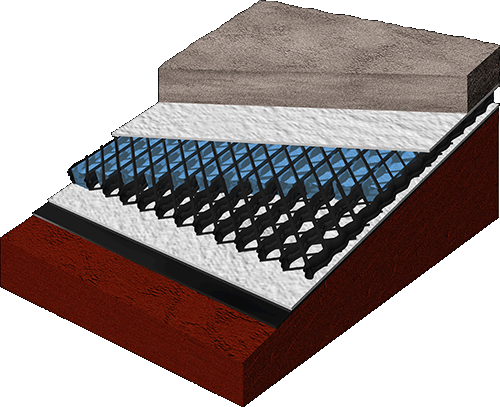
During the Nineties TENAX invested a lot of resources and energy in research aimed at creating new products in the civil engineering and geotechnical field, in order to resolve specific ecological and environmental issues. For example, in order to resolve the problem of drainage in controlled waste sites, TENAX invented Tendrain, an innovative product made up of a three-dimensional structure with a drainage capacity ten times higher than any other net. This technology was quickly protected by a variety of international patents.

2000 onwards- TENAX is directing its technological know how to serve its increasingly marked customer focus
No longer products, but solutions -this is the logic that TENAX has been developing over recent years, using its own exclusive technological know how to serve an increasingly marked customer focus. This translates into a refining of its ability to understand, and in some cases anticipate customer needs, and the desire to open up new channels of communication using its own marketing and technical/production experience. TENAX is also focused on gathering increasing knowledge of applications of its products and is adding new resources to support related sales. At the same time, the Group is continuing to invest in research and experimentation. It is continuing with scientific collaborations and synergies with those establishments that are concerned with environmental protection in particular, and is participating in projects aimed at creating products for ecologically-compatible progress.

TENAX International B.V.
Via Ferruccio Pelli, 14, CH-6900 Lugano, Switzerland • Tel. +41+91.9233412 • Fax +41+91.9237517

© TENAX Group all rights reserved