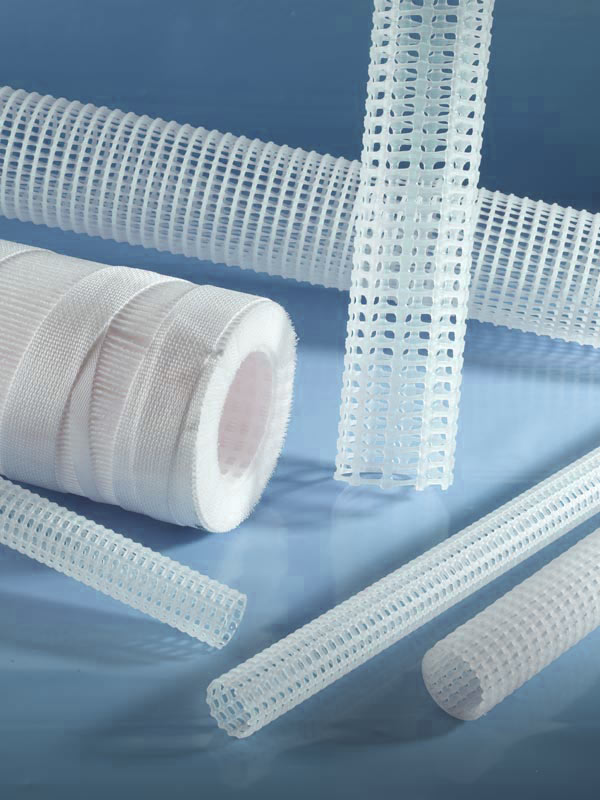
TENAX meshes for
industry are produced by the processing of polyolefins. These materials
have an exceptionally high level of esistance to other chemical
substances, mould, bacteria and spores.
Although derived from the
same family, various classes of polymers exist which differentiate
themselves from each other in a variety of ways. The choice of one
polymer against another, combined with the production process employed,
will result in a particular net suitable for a specific purpose.
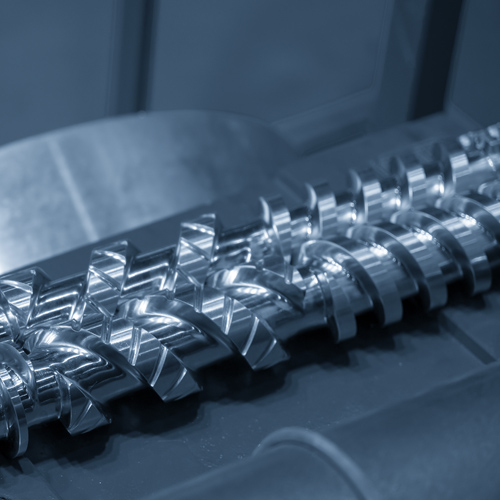
The manufacturing process
It is possible to improve the basic performance characteristics
of the polymer during the manufacturing process.
Molecular orientation
carried out following extrusion, for example, makes the finished
product considerably more resistant to stretching.
All net products
from the TENAX Group are characterised by a high level of dimensional
stability, which makes them suitable for utilisation where small
tolerances are required.
Use of additives
Some meshes, polyester products for instance, have a very high melting
point. The addition of an appropriate chemical, also allows the
manufacturing of flame retardant nets.
Other types of additives
are used to modify particular characteristics, such as resistance
to UV light, and to add anti-bacterial and bio-degradability properties
and the colour of the end product.
Contact with food products
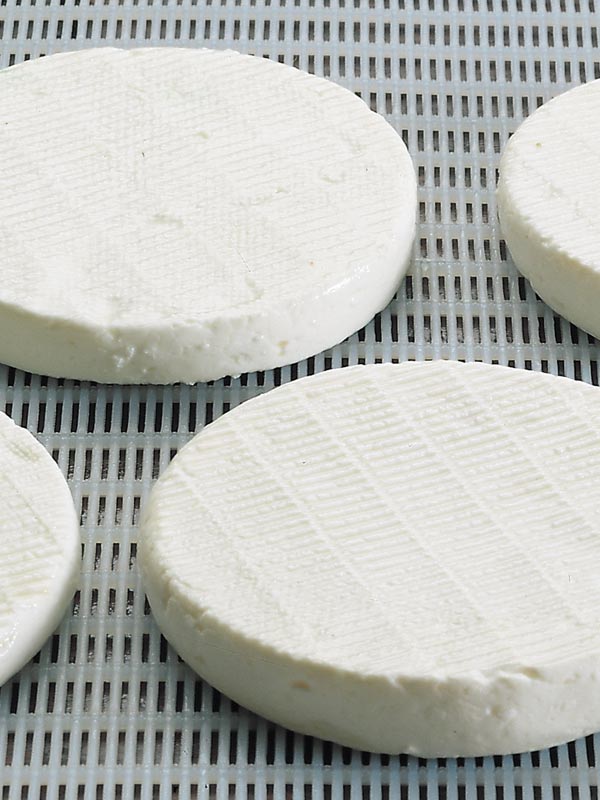
For products destined for use in the food industry, TENAX uses exclusive
polymers and additives that comply with current regulations. Relevant
certification can be provided on request.
Disposal and recycling
All TENAX products are completely recyclable through either mechanical,
chemical or energy generating processes.
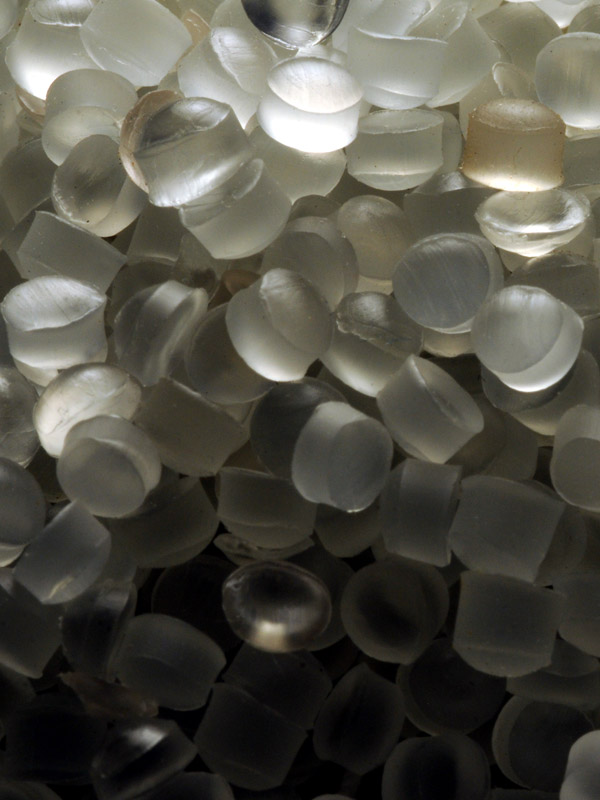
Mechanical recycling is
carried out by the transformation of one material to another by
granulating the excess plastic. Chemical recycling occurs through
chemical decomposition to return the product to its basic components
and is exclusive to plastics.
Energy generating recycling is achieved
through the recuperation of energy through incineration. For particular
applications, some meshes can be manufactured with biodegradable
materials, accelerating their decomposition. |