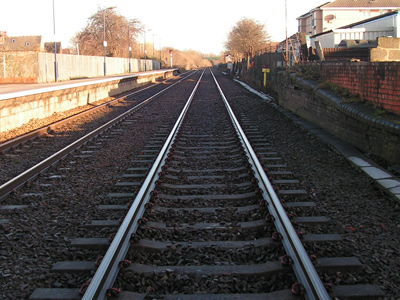
The tracks are subject to vertical movement due to the cyclical load of the trains; this movement is often visible to the naked eye when trains pass by.
This excessive movement is harmful to the tracks and therefore to the safety of the structures and passengers; in addition, broken aggregate fragments reduce drainage capacity, which is a fundamental characteristic in the case of railway structures.
In these cases, it is necessary to restore operating conditions by filling in the gaps and compacting the ballast; these operations require the interruption of train traffic, causing inconvenience to passengers.
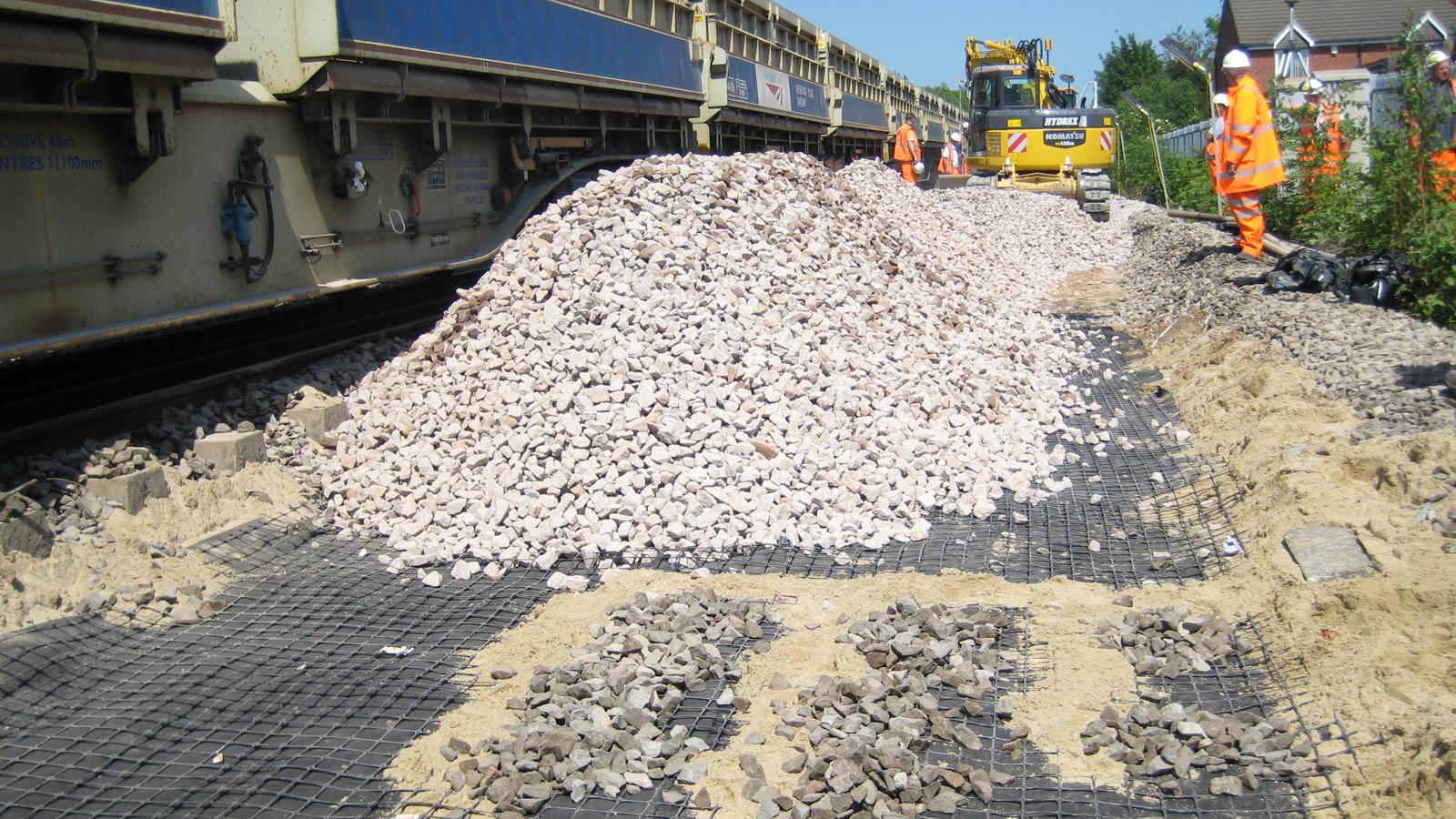
To avoid these situations, it is necessary to increase the performance of the ballast by using the LBO 370 geogrid: when the ballast is spread over the geogrid, the aggregate elements interlock in the mesh of the product, creating an interlocking mechanism between the ballast and the geogrid.
The tensile strength of the LBO 370 geogrid combined with the interlocking mechanism improves the characteristics of the ballast, reduces vertical displacement, and increases the useful life of the materials. All this leads to both economic benefits (reduction in extraordinary maintenance) and improved functionality of the railway line (fewer interruptions for passengers).