A popular saying goes, “A man in the garden is a dead man,” yet in recent years, more and more people have rediscovered the joy of growing some of their own food, driven by the desire to bring wholesome produce to the table, reduce waste, and adopt a more sustainable lifestyle. Thanks to technological advances—such as automated irrigation—tending a vegetable garden no longer requires the same level of effort as it once did. Furthermore, the growing focus on sustainability finds in the vegetable garden a way to help limit packaging, reduce transportation associated with the food supply chain, and promote more mindful consumption.
Gardening today means not only reducing one’s impact on the environment but also adopting strategies to make the experience enriching—not only because it produces healthy food, but also because, as some studies suggest, working the soil appears to lower blood pressure, reduce cortisol, boost the immune system, and expose one to a bacterium—Mycobacterium vaccae—found in the soil that acts as a natural antidepressant. But there is another, more subtle effect: a vegetable garden forces you to come to terms with time. In the slow rhythm of growth and the changing of the seasons, the mind calms down, attention is renewed, and stress melts away. This, however, means using space intelligently: protecting plants without resorting to invasive solutions and creating structures that support the growth of crops, improving their health and productivity.
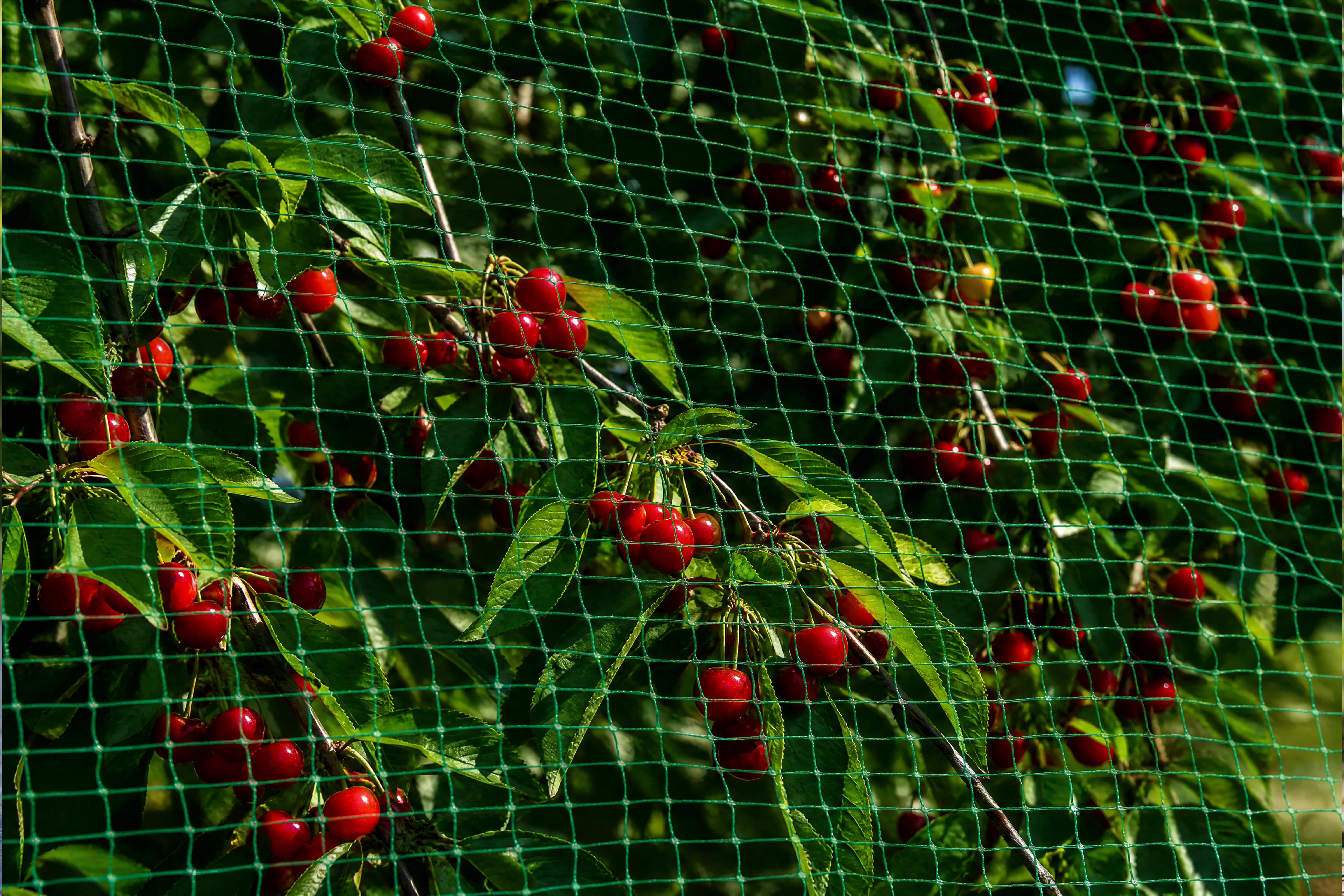
One of the most underestimated enemies of the home garden, for example, is neither drought nor fungal diseases: it’s birds. Freshly planted seeds, flowering buds, and ripening fruit are tasty treats for birds that can compromise a large part of the harvest, often without us noticing in time. To solve this problem, Tenax offers Ortoflex, a polypropylene bird netting with an 8x10 mm mesh, designed to protect crops in a simple and non-invasive way: no harm to the birds, no chemicals, no complications. It can be placed directly over plants, draped over the canopy of fruit trees, or mounted on support structures. It allows air, water, and light to pass through without hindering growth. UV-stabilized, it withstands all seasons and can be reused year after year.
One of the most effective strategies for increasing productivity, on the other hand, is to take advantage of the vertical growth of climbing plants. Tomatoes, cucumbers, green beans, peas, and many other varieties grow best when they can grow upward. In addition to taking up less space, the plants receive better light exposure and greater ventilation, reducing moisture on the leaves and the risk of fungal diseases. To do this, however, they need a stable support to grow properly. Without a stake, the stems bend, the heavy fruit touches the ground and spoils, and light exposure becomes uneven—all of which results in a smaller, lower-quality harvest. Steel Up is Tenax’s plastic-coated steel stake with a textured outer surface, designed to promote the plants’ natural anchoring without the need for constant tying. The pointed tip inserts easily into the ground without tools. Hollow inside, it is lightweight yet durable, does not rust, and withstands all weather conditions. Available in five sizes (ranging from 90 cm to 210 cm in height), it adapts to plants of varying sizes and vigor.
However, plants do not all grow at the same rate, nor do they all reach the same height; for this reason, a fixed stake is often not a permanent solution, because once the plant outgrows it, the problem arises again. Steel Up Modular addresses this need with a simple design: it is a modular, plastic-coated steel stake with a diameter of 16 mm that can be extended by adding a second section. The modules, available in lengths of 60 and 90 cm, connect to one another to reach the necessary height season by season: in other words, the stake grows along with the plant.
In an era when sustainability is often associated with major industrial or infrastructural transformations, even a home or community garden can become a testing ground for best practices. And in the end, one might say: forget about the “dead man”—today, the garden is one of the best places to be.