The Earth is scorching hot. The ECOSTRESS instrument on the International Space Station captured aerial images of European cities during one of the hottest summers in recent decades, and satellite images of Rome, Paris, and Madrid show intense red patches: the heat trapped in the concrete is visible even from space. The heat island effect is a microclimatic phenomenon that occurs when temperatures in a city are significantly higher than in the surrounding rural areas. This overheating is caused by the absorption of heat by artificial surfaces such as roads, buildings, and pavements.
Faced with these figures, European cities are rethinking themselves. Take Paris, for example, where the Seine is once again suitable for swimming and the Canal Saint-Martin has been transformed into an open-air pool; in Jerez de la Frontera, the streets have become vine-covered pergolas, while Milan has transformed the site of the former Alfa Romeo factory in Portello into a public park built around three green hills, healing an urban scar.
Smart cities are filling up with climate refuges and implementing “de-paving” strategies—that is, removing asphalt from streets, parking lots, plazas, and schoolyards to expose the soil beneath. Trees, lawns, waterways, and parks are becoming climate infrastructure—tools capable of lowering local temperatures, reducing heat stress, and improving quality of life in densely built-up neighborhoods.
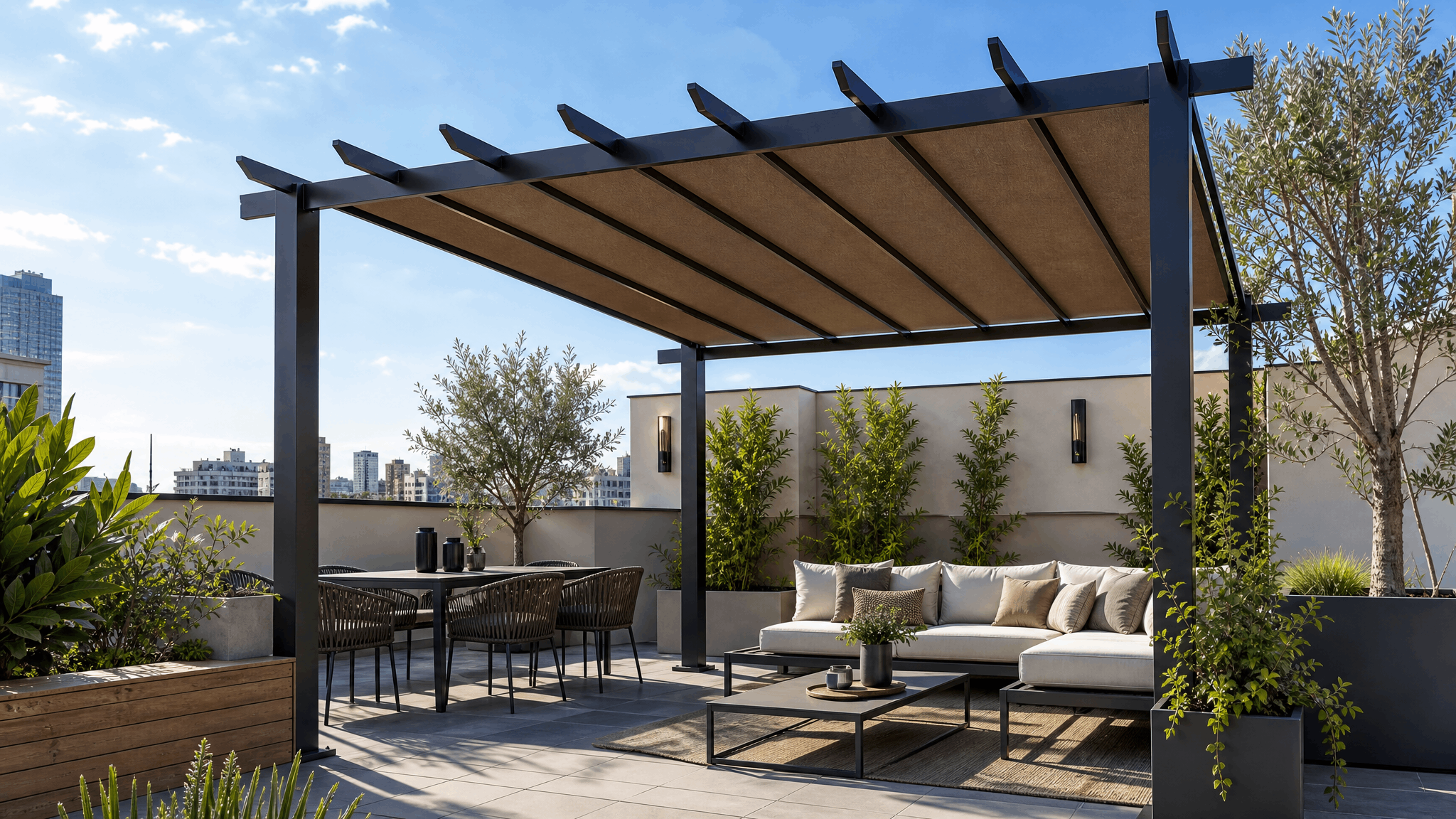
And while major cities are adapting in the face of climate change to provide one of the most sought-after resources of our time—coolness—Mediterranean cities are rediscovering the age-old luxury of shade through arcades, pergolas, and shutters—but that’s not all. One of the most immediate and effective solutions for those managing an open space—such as a terrace, parking lot, garden, or recreational area—is shade netting: technical solutions designed to reduce direct sunlight on surfaces, lowering the perceived temperature without requiring structural modifications.
New-generation shade nets are designed to provide the right level of shading without completely blocking air circulation, thereby preventing the risk of creating pockets of stagnant heat—just like our Tenax Soleado line , which includes HDPE-woven nets that can be installed horizontally as solar shading. These nets filter direct light and reduce the heat load on the surfaces below without compromising natural ventilation.
The line is available in several versions with shading levels ranging from 70 to 100% and a color palette designed to blend aesthetically into various settings, from the green of a private garden to the gray of a contemporary urban space. Allproducts are UV-treated to ensure long-lasting durability without losing color or performance, and are light and flexible enough to be installed using simple accessories, even without specific technical expertise.
Discover the full range of SOLEADO products