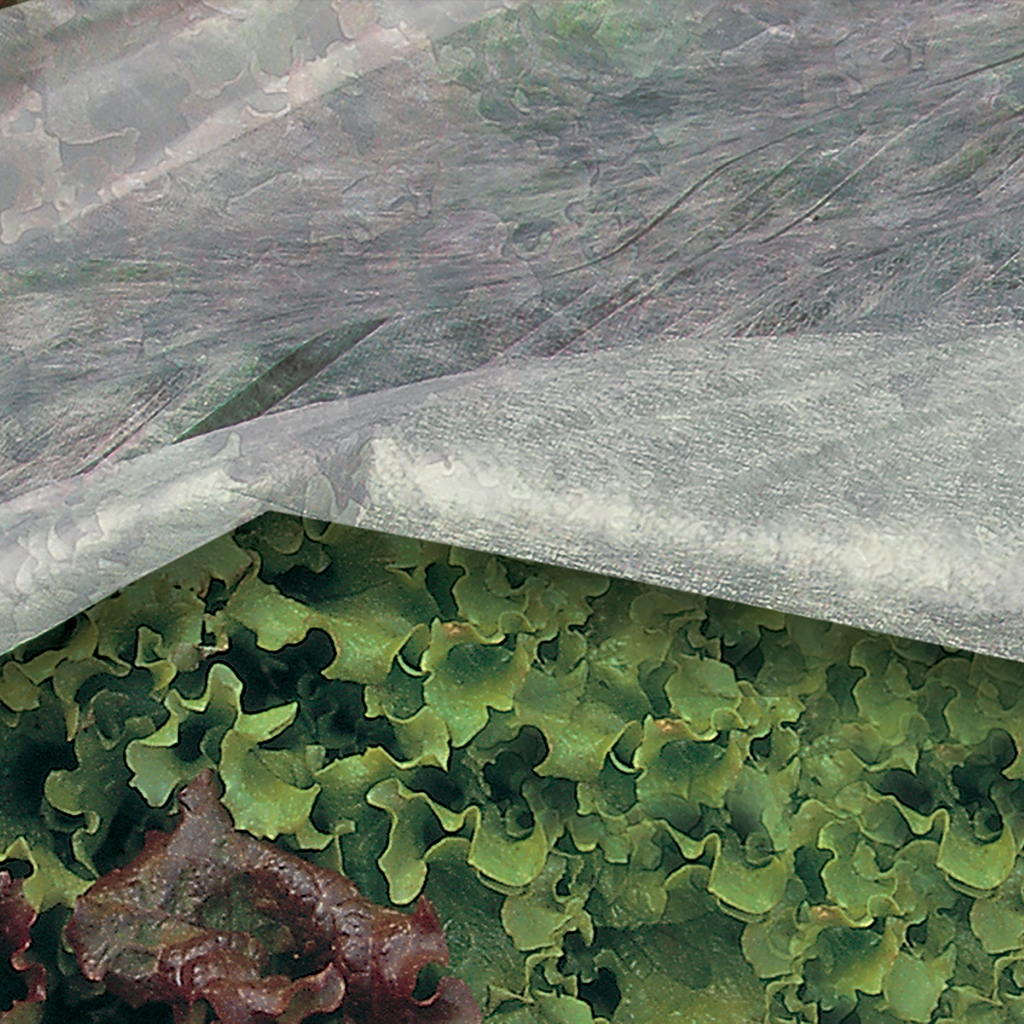
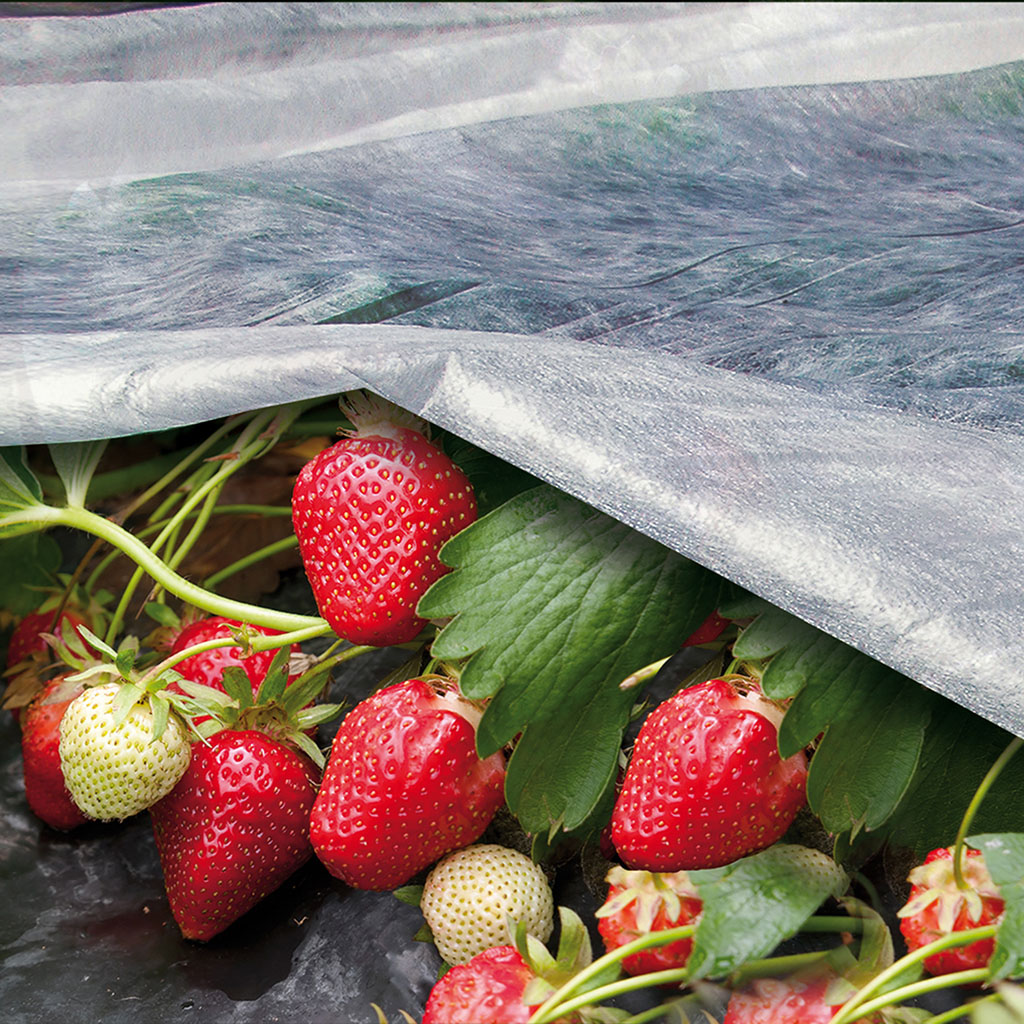
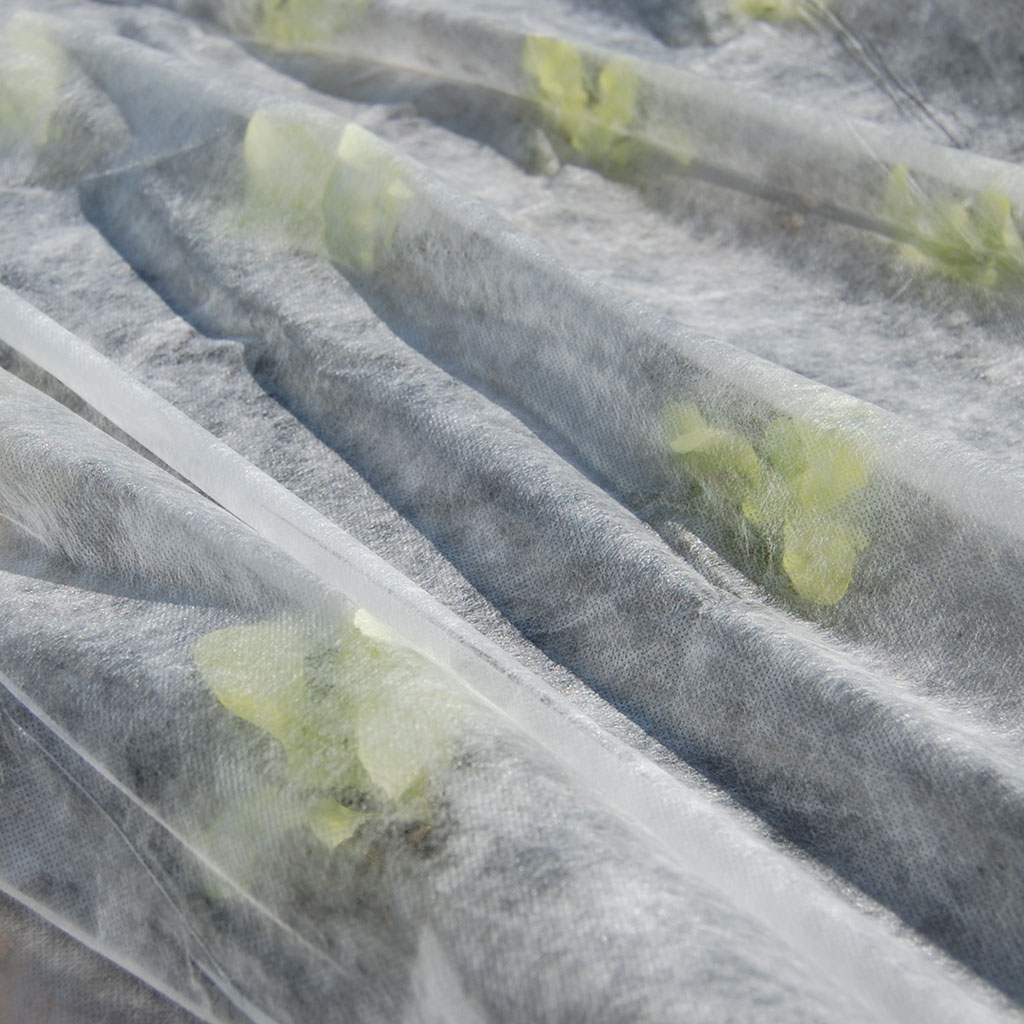
Made of permeable polypropylene that allows water, air, and light to pass through, it is non-toxic and resistant to sunlight, remaining unchanged over time. Easy to cut with simple scissors, it is soft, lightweight, and can be laid directly on crops or support structures. Reusable if stored completely dry at the end of the season, it can be washed by hand if very dirty. Ideal for protecting seedlings from the last cold spells, it promotes germination and brings forward the harvest by creating an ideal microclimate. During spring, it is advisable to lift it during the hottest hours of the day and replace it at night. By overlapping several layers, heat loss is further reduced thanks to the air chambers between the layers. Protective and forcing veil ideal for the last cold spells, milder climates, and the arrival of spring. It protects seedlings, promotes germination, and brings forward the harvest.
Anti-UV
Forcing factor
Permeable
Weight 17 g/m²
What is it for?
- Prevent root freezing.
- Reduce stress caused by low temperatures.
- Maintain a stable microclimate around the plants.
- Protect against damage from wind and freezing rain.
- Extend the growing season of plants.
- Improving plant survival during winter.
- Bring forward sowing and extend the growing season.
- Anticipate ripening and produce early crops in spring.
Features
- Material: made of non-toxic polypropylene, not derived from recycled raw materials, lightweight and breathable.
- UV protection: treated to resist UV rays and last over time.
- Resistance: adequate resistance to tearing and laceration.
- Lightweight: easy to handle and install.
- Reusable
- Weight 17 g/m²
Benefits
- Cold protection: maintains a warmer temperature around plants, preventing damage from frost and cold temperatures.
- Optimal growth: promotes a microclimate that encourages healthy plant growth during cold periods.
- Higher yield: reduces the risk of crop loss due to adverse weather conditions, increasing garden productivity.
- Quality protection: protects not only from the cold but also from wind, heavy rain, and snow, preserving the integrity of crops.
- Ease of use: lightweight, easy to apply and shape, allowing crops to be covered quickly.
| Code | Dimensions (m) | Color | EAN code | CONF/UDV | UDV |
|---|---|---|---|---|---|
| 1A230158 | 1.6 X 10 | WHITE | 8002929000699 | 48 | Piece |
| 73009351 | 4 x 250 | WHITE | 8002929013002 | 1 | ROLL |
| 1A230159 | 2.4 X 10 | WHITE | 8002929036582 | 36 | Piece |
| 1A040405 | 1.6 X 500 | WHITE | 8002929069658 | 1 | ROLL |
| 1A040406 | 2.4 X 500 | WHITE | 8002929069665 | 1 | ROLL |
| 1A230163 | 2 x 20 | WHITE | 8002929119513 | 30 | ROLL |
| 1A240162 | 1.6 X 5 | WHITE | 8002929125422 | 48 | Piece |
| 1A240160 | 2 x 500 | WHITE | 8002929136978 | 1 | ROLL |
Helpful tips
TENAX non-woven fabrics allow good light filtration and proper ventilation, ensuring that plants
can continue to grow without suffering from cold stress. They are ideal for covering both the aerial parts and roots of plants, whether in pots or in the ground.
- Consider using multiple layers of non-woven fabric in extremely cold conditions, especially for particularly delicate plants.
- Use pegs or nails to secure the fabric firmly to the ground, preventing the wind from lifting or moving it.
- Use thermometers and hygrometers inside the tunnel to monitor temperature and humidity.
When to use protective non-woven fabric for plants
LATE FALL: Protecting plants from the cold in late fall is essential to properly prepare them for the winter months. This practice allows plants to gradually adapt to lower temperatures, protecting them from early frosts and conserving heat in the soil. It also reduces the risk of thermal shock and root damage, ensuring a smoother transition to intense cold.
EARLY SPRING: Starting early growth during this period gives plants a head start when temperatures begin to rise. This is particularly useful for regions with long winters and short springs, where the soil takes longer to warm up.