TENAX logo International web site
change
 
  International web site Geosynthetics Drainage  
 
Geosintetici per il drenaggio in discarica drenaje de rellenos
sitemap contact us
 
  Drainage  

Landfill

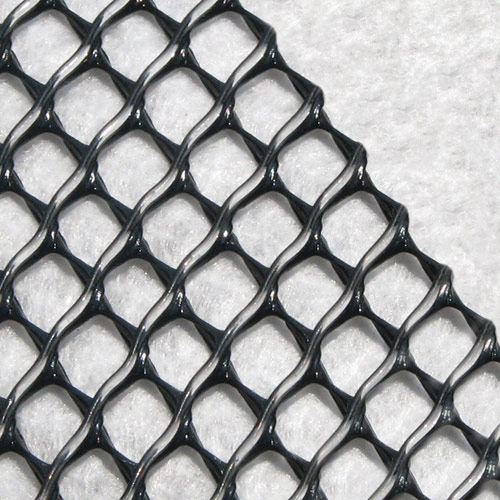
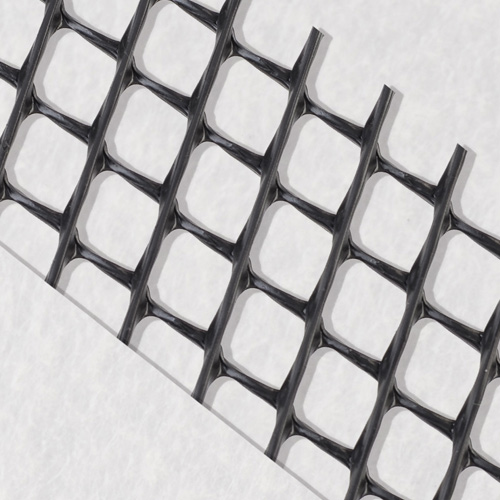
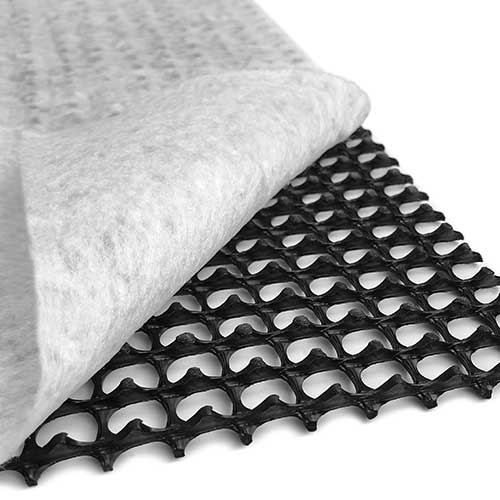
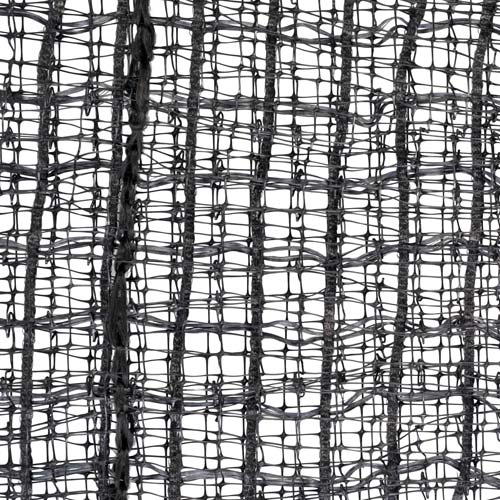
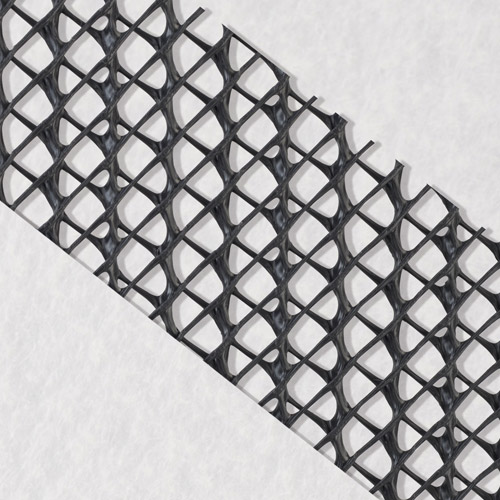
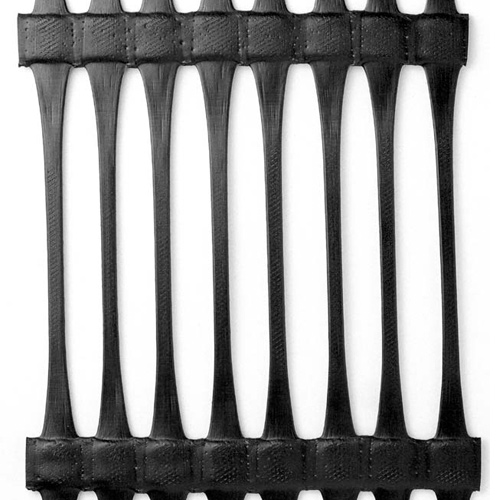
The use of TENAX geocomposites, as leachate collection system, offers important technical advantages in terms of construction simplicity, materials acquisition, slope stability, and resistance against erosion and aging.

The economic advantages are substantial when comparing the purchasing and installation costs of an aggregate drainage system with those of the TENAX range of geonets and geocomposites.

TENAX Geosynthetics allow for substantial savings by increasing the volume available for waste disposal due to their lower thickness and for the fact that they allow the construction of much steeper slopes than those made from sand.

On the average, savings of 50% are obtainable by using geosynthetics over traditional material.

A leachate collection system is a system of pipes and drainage medium, either a gravel layer or a syntethic layer, designed to capture all leachate and prevent groundwater contamination. Leachate Collection and Removal System (LCRS) shall maintain leachate depths of less than 0.30m.

TENAX geonets and geocomposites are synthetic drain designed to solve the following drainage situations:


CLOSURE of landfill
(landfill capping)
Surface Water Collection and Removal System (SWCRS)
Landfill Gas Venting (LFG)
 
BOTTOM of landfill
Leachate Collection and Removal System (LCRS)
Leak Detection System (LDS)
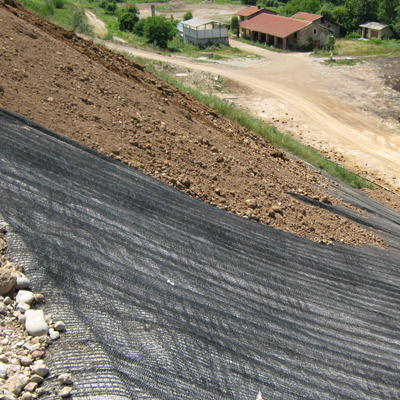
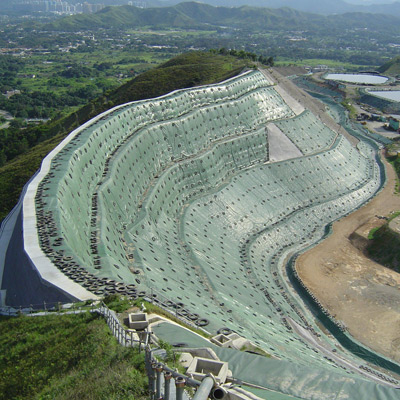
landfill drainage
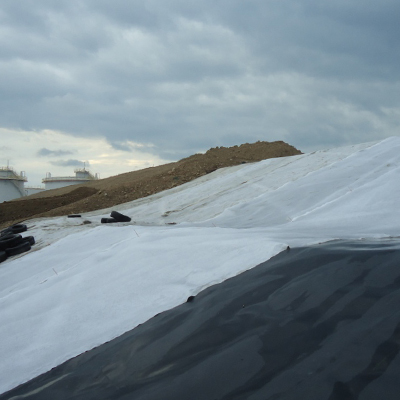
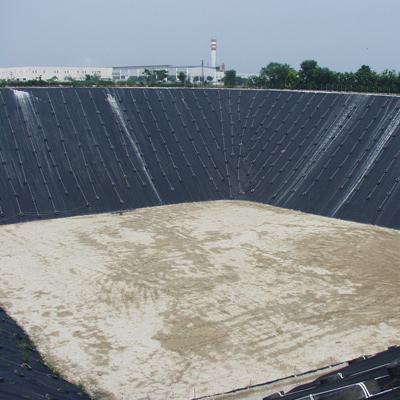
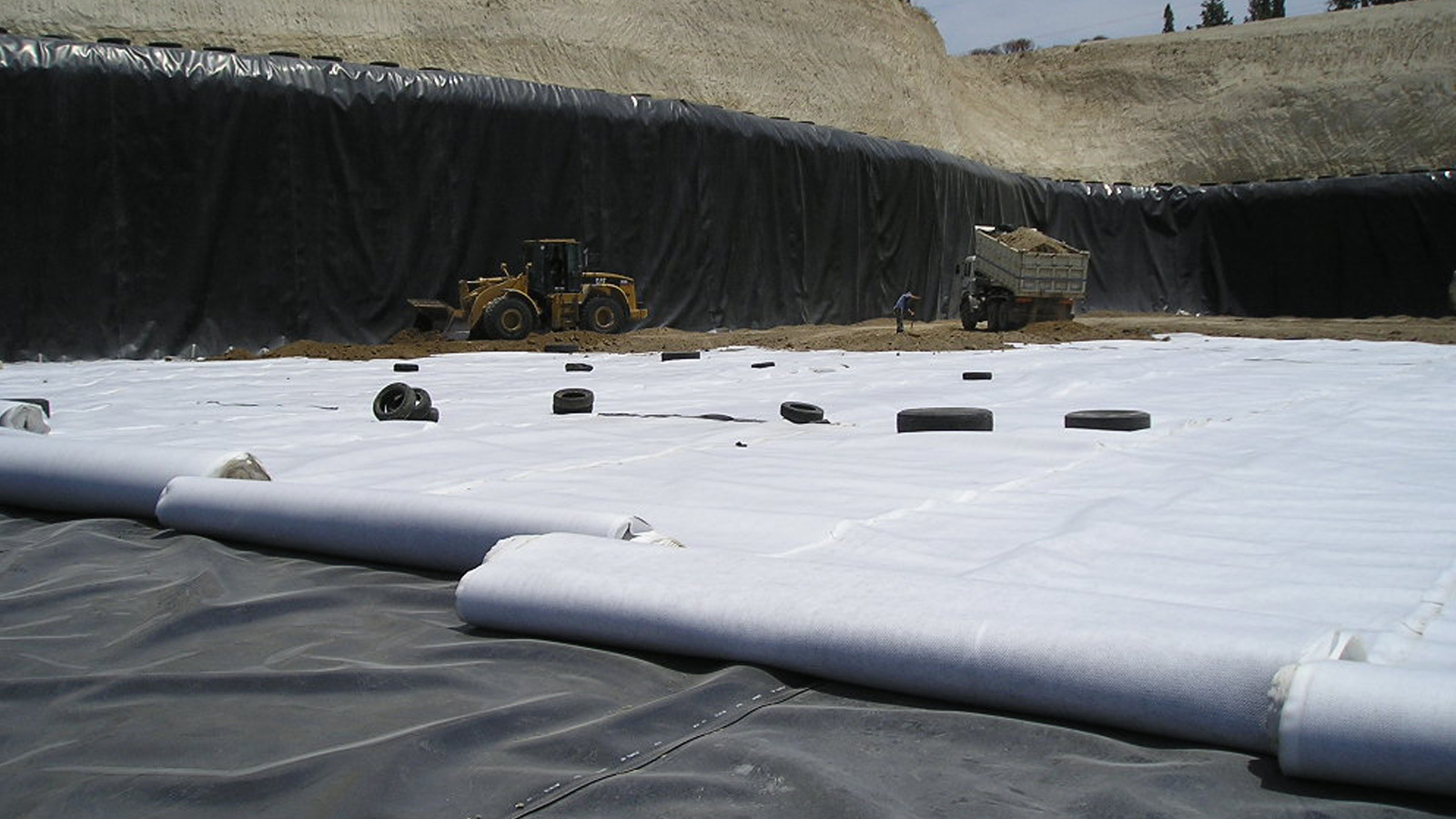
Calcinato, BS (Italy)
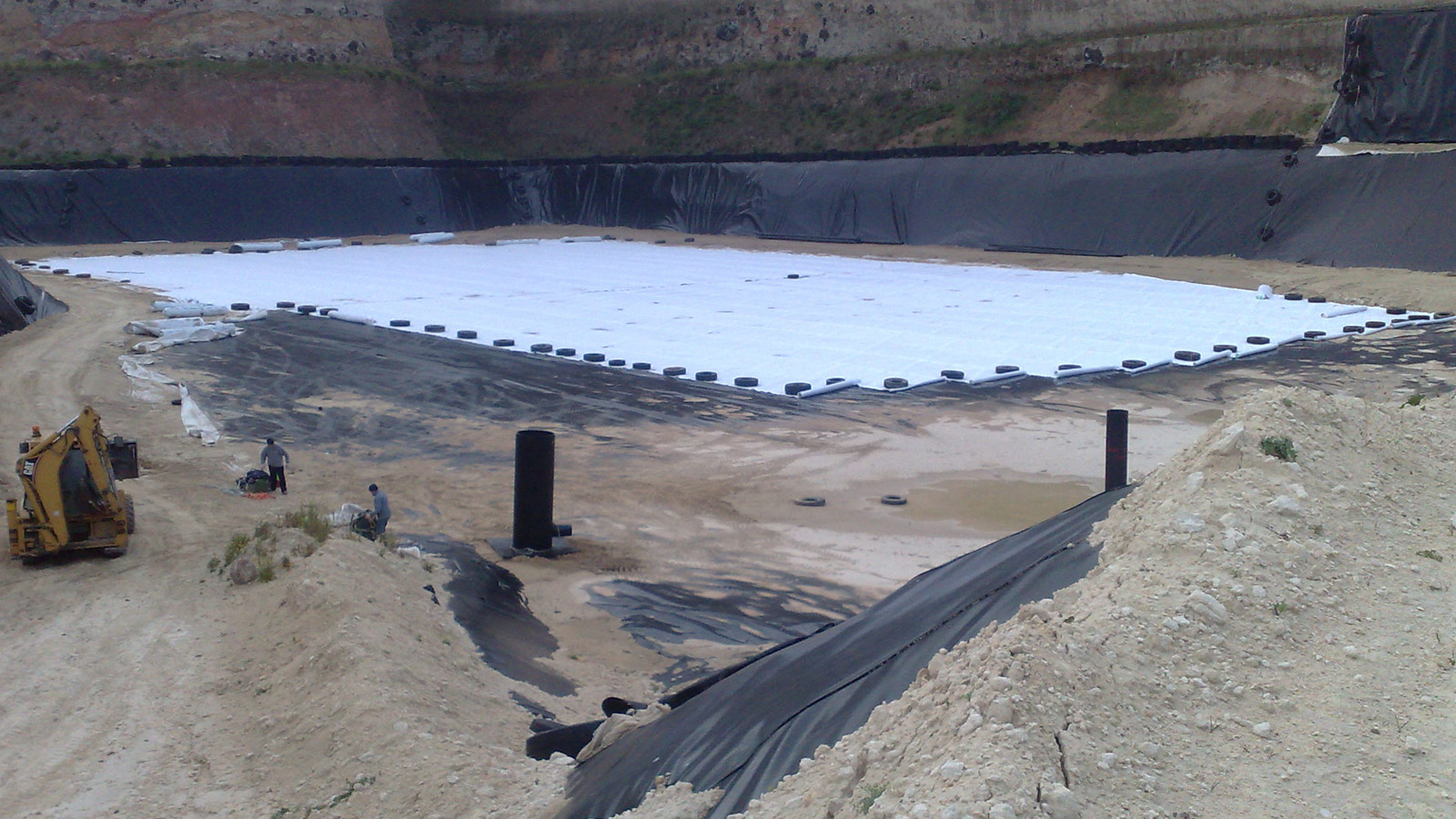
Installation of Lining System
Schematic example of landfill application
Municipal solid waste system
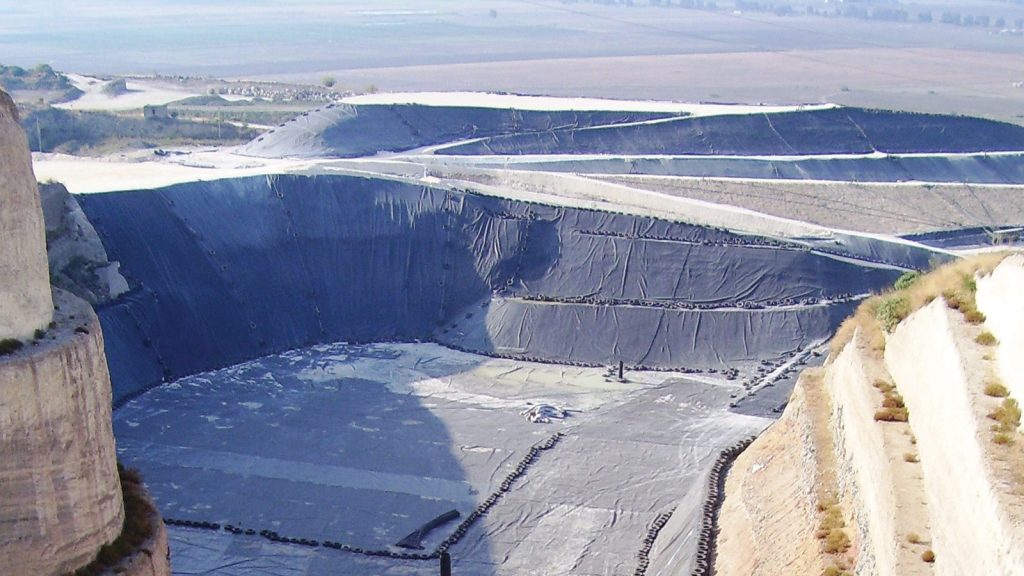
Each day, million tons of municipal and hazardous wastes are disposed of in landfills or other land disposal sites. A landfill is a large area of land or an excavated site that is specifically designed and built to receive wastes.

A typical modern landfill is lined with a layer of compacted clay and synthetic geomembrane to prevent the waste and leachate from leaking into the ground or ground water.

Geocomposite drains and aggregate material are used at the sides and bottom of the landfill to collect the leachate that flows through the decomposing waste.

The leachate is then collected sent to a leachate recovery facility to be treated.

Municipal Solid Waste System, conventional design
Municipal Solid Waste System
Minimum liner system
Conventional design

Municipal Solid Waste System, Geosynthetics design solution
Municipal Solid Waste System
Minimum liner system
Geosynthetics design solution
Hazardous waste landfill
While landfills that accept municipal solid waste have typically a layer of clay and synthetic liners and a leachate system to prevent leakage, for hazardous waste landfills extra precautions must be taken.

For example, a hazardous waste landfill must have two impermeable liners layers, one consisting of a geomembrane (Primary liner), and the other composed of both a geomembrane and a thick layer of compacted clay material (Composite Secondary liner).

In addition, a landfill accepting hazardous waste must have two leachate detection systems: the upper layer for Leachate Detection and Removal System (LCRS) and lower layer for Leak Detection and removal System (LDS).

Leaks of leachate from the primary waterproofing liner can occur fundamentally for two reasons: defects in seams of the geomembrane or damages to the liner during placement and compaction of waste materials.

Hazardous waste landfill, conventional design
Hazardous waste landfill
Minimum liner system
Conventional design

Hazardous waste landfill, geosynthetics design solution
Hazardous waste landfill
Minimum liner system
Geosynthetics design solution
Typical landfill cover system
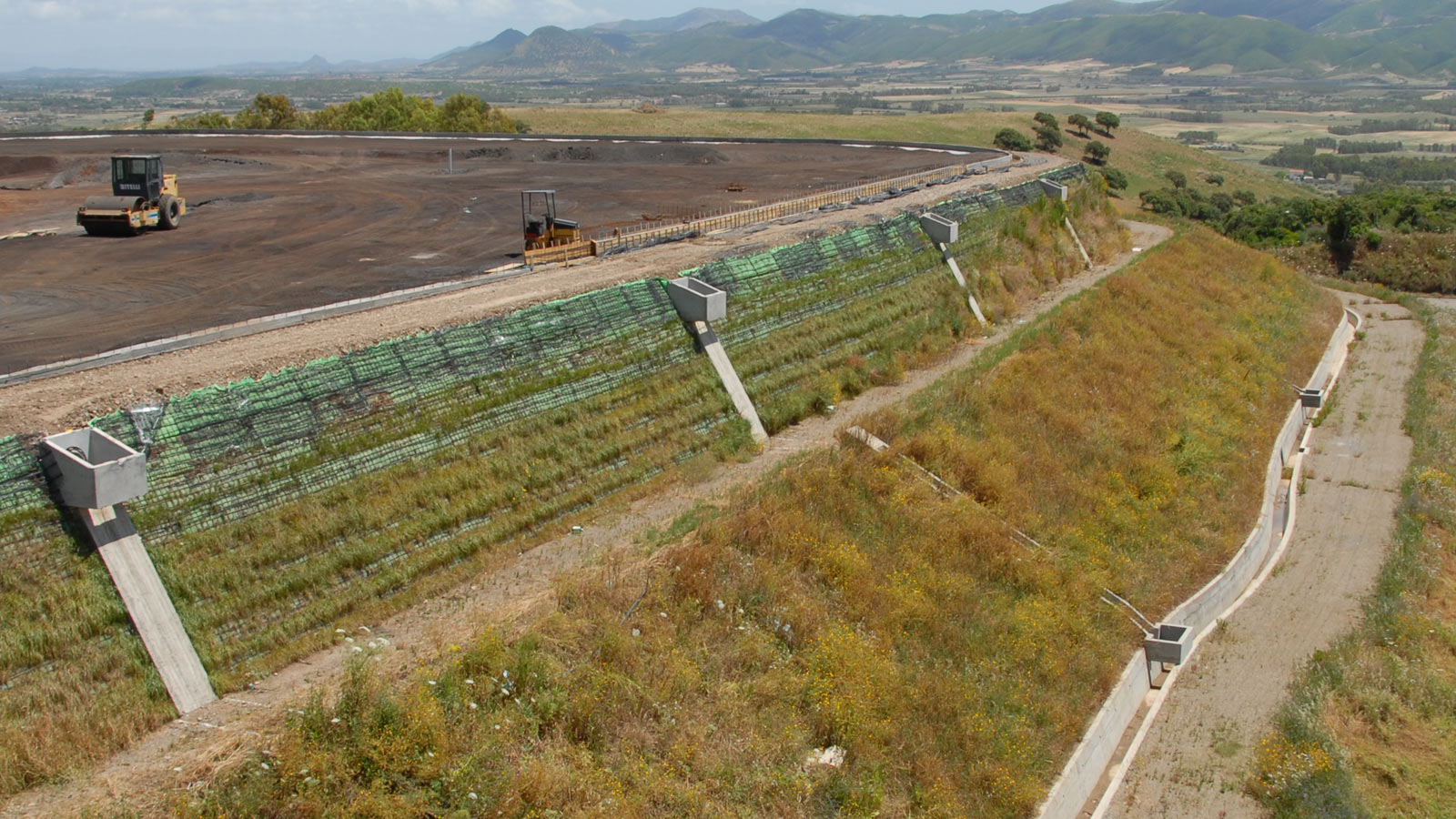
When a landfill reaches capacity, it is usually capped to ensure that rainfall will not infiltrate the surface.

The leaching of the rainwater through the landfill could cause contamination of the groundwater, and nearby surface waters. Thus covers are always required on completed landfills.

A composite cover, in which use has been made of soils and synthetic materials, can effectively eliminate infiltration but must be carefully designed to take care of considerations such as slope stability, long-term degradation and erosion.

In addition significant amounts of gas can be produced from decomposition of waste and an appropriate Landfill Gas Venting system (LFG) shall be designed. Methane extraction system wells are used to collect landfill gas.

The gas may be used to generate electricity on site, burned at flare locations on the landfill, or used in the sludge combustion process.

Once a landfill is capped (closed), the site shall be monitored for gas and leachate for a minimum of 30 years after the closing date. After a landfill is capped, the land may be used for recreation sites such as parks, golf courses.

Typical landfill cover system
Conventional design

Typical landfill cover system, geosynthetics design solution
Typical landfill cover system
Geosynthetics design solution
  TENAX © 1995-2009 All rights reserved